The Ever-Evolving Journey of Scientific Discovery
A Glimpse into the History of Science
Science, as we know it today, is the product of centuries of inquiry and exploration. From the ancient philosophers who speculated about the nature of matter to the modern scientist using advanced technology to probe the cosmos, the journey of scientific discovery is rich and varied. The scientific method, established in the Renaissance, brought about a paradigm shift that promoted experimentation and observation over mere conjecture.
The Role of Experimentation
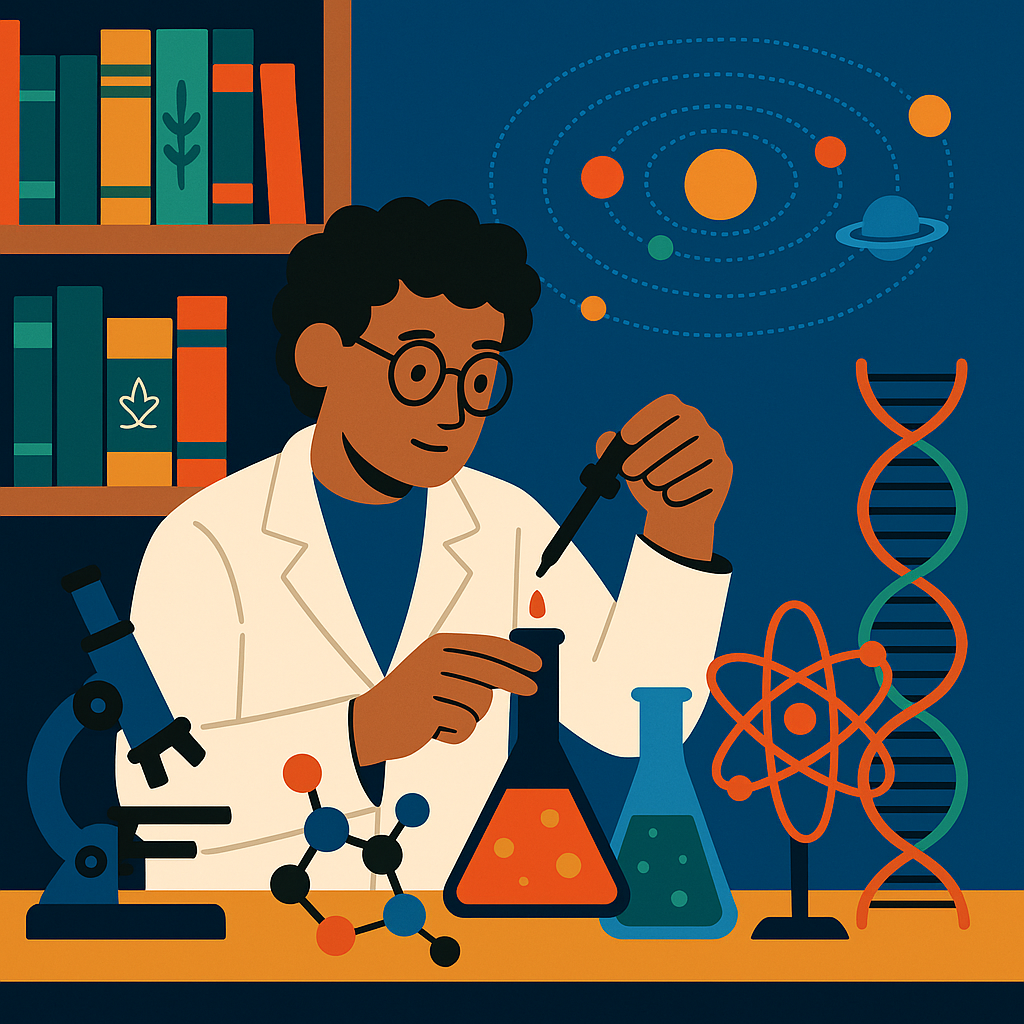
One of the pillars of science is experimentation. This process allows researchers to test hypotheses and gather empirical evidence. Whether in a laboratory or field settings, experimentation leads to new discoveries and innovations. Here are some essential aspects of experimentation:
- Controlled Environment: Experiments often take place in controlled environments to eliminate variables that could skew results.
- Reproducibility: A successful experiment must be reproducible by others, ensuring reliability and accuracy of results.
- Data Analysis: The analysis of data collected during experiments is crucial to draw meaningful conclusions.
Branches of Science
Science is divided into various branches, each exploring different aspects of the natural world. Here are a few of the major disciplines:
- Physics: The study of matter, energy, and the fundamental forces of nature.
- Chemistry: The exploration of substances, their properties, and the changes they undergo.
- Biology: The science of life, focusing on living organisms and their interactions with the environment.
- Earth Sciences: This encompasses geology, meteorology, oceanography, and more, focusing on our planet and its processes.
- Astronomy: The study of celestial bodies and the universe as a whole, revealing the mysteries beyond our planet.
Modern Scientific Breakthroughs
The 21st century has seen unprecedented advancements in scientific knowledge and technology. Here are some key breakthroughs that have changed our understanding of the universe:
- CRISPR Technology: Revolutionizing genetics, CRISPR allows for precise editing of DNA, opening new doors for medicine and agriculture.
- Quantum Computing: This technology promises to exponentially increase computing power and solve problems once thought impossible.
- Space Exploration: Missions to Mars and the increasing understanding of exoplanets have expanded our knowledge of the cosmos.
The Importance of Science Education
As scientific knowledge continues to grow and shape our world, the importance of science education cannot be overstated. Educating the next generation of scientists and innovators is vital for addressing global challenges, such as climate change, health crises, and technological advancements. Schools and organizations must emphasize STEM (Science, Technology, Engineering, and Mathematics) programs to foster a passion for discovery and critical thinking.
Conclusion: The Future of Science
Looking ahead, the future of science is bright. With rapid advancements in technology and a global community working together, we are poised to uncover even more of nature’s mysteries. As we navigate this ever-evolving journey of scientific discovery, one thing remains clear: the quest for knowledge is quintessentially human, driven by our innate curiosity and desire to understand the universe.